


Introduction
A couple in Pasadena budgeted $25,000 for their kitchen remodel. Nine months later, they’d spent $61,000. Their contractor wasn’t a scammer; they just didn’t understand how California kitchen remodeling costs actually work before they started signing checks.
That story is more common than you’d think across California, from San Diego bungalows to Sacramento tract homes to San Francisco condos squeezed into Victorian buildings. California is one of the most expensive states in the country to remodel anything. Labor costs more. Permits cost more. Materials cost more. And if you’re in a city like Los Angeles or the Bay Area, “more” can mean 30–50% above the national average.
This guide gives you the real numbers, not the optimistic estimate your contractor gives at the first meeting. We’ll cover what a kitchen remodel actually costs at every budget level in California, what drives the price up (and what doesn’t have to), and where homeowners consistently make expensive mistakes.
What Does a Kitchen Remodel Cost in California?
The honest answer: anywhere from $15,000 to $150,000+, depending on size, location, and scope.
That’s a wide range, so here’s how it breaks down more practically:
| Budget Level | Typical Spend | What You Get |
|---|---|---|
| Low | $15,000–$30,000 | Cabinet refacing, new counters, updated fixtures, and paint |
| Mid | $35,000–$75,000 | Semi-custom cabinets, quartz counters, new appliances, and flooring |
| High | $80,000–$150,000+ | Full gut, custom cabinets, luxury appliances, and layout changes |
The national average for a mid-range kitchen remodel sits around $27,000–$35,000. In California, that same scope runs $45,000–$70,000. That gap is almost entirely labor.
California-specific cost factors:
- Prevailing wage rules in some counties push contractor rates higher
- Seismic requirements mean structural work (moving walls, changing load paths) needs engineering sign-off
- Title 24 energy compliance — California’s energy code — can require specific lighting, ventilation, and insulation upgrades when you pull permits
- Bay Area and LA premium — expect 25–40% above inland California for the same work
Breaking Down the Costs: Where Your Money Actually Goes
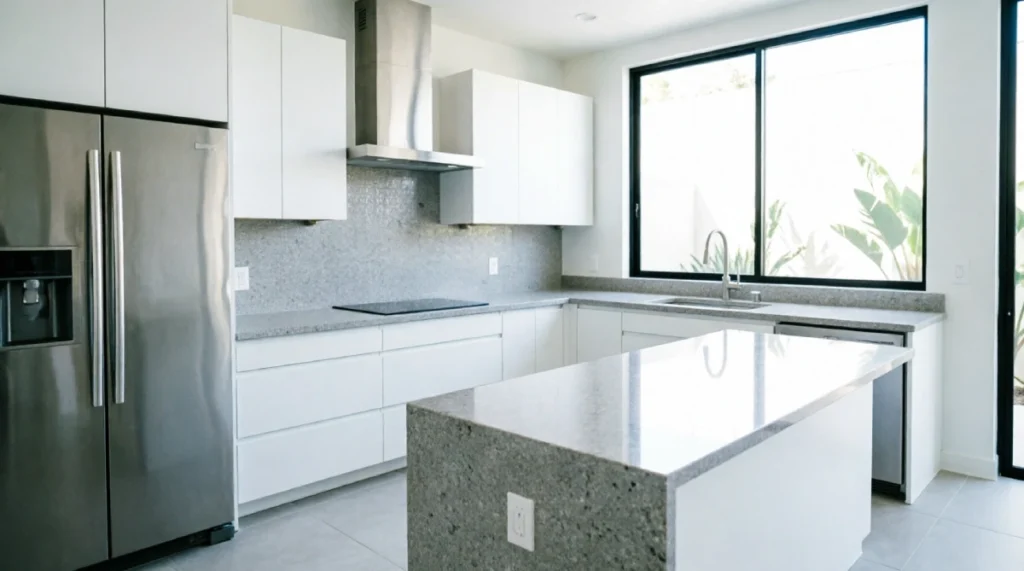
Most homeowners underestimate labor as a share of total cost. In California, labor typically represents 40–50% of the total project budget — higher than in most other states.
Typical cost breakdown for a mid-range California kitchen remodel ($55,000):
- Cabinets: $12,000–$18,000 (semi-custom)
- Labor (installation, demo, finish work): $15,000–$22,000
- Countertops: $5,000–$9,000 (quartz)
- Appliances: $6,000–$10,000
- Flooring: $3,000–$5,000
- Plumbing and electrical: $4,000–$7,000
- Permits: $1,500–$4,000
- Miscellaneous (hardware, lighting, backsplash): $2,000–$5,000
One thing that surprises California homeowners: permits are not optional. The cities of Los Angeles, San Jose, and San Francisco all require permits for structural changes, electrical work, and plumbing relocations. Getting caught without one when you sell creates serious title and escrow problems.
Cabinets: The Biggest Variable in Your Budget
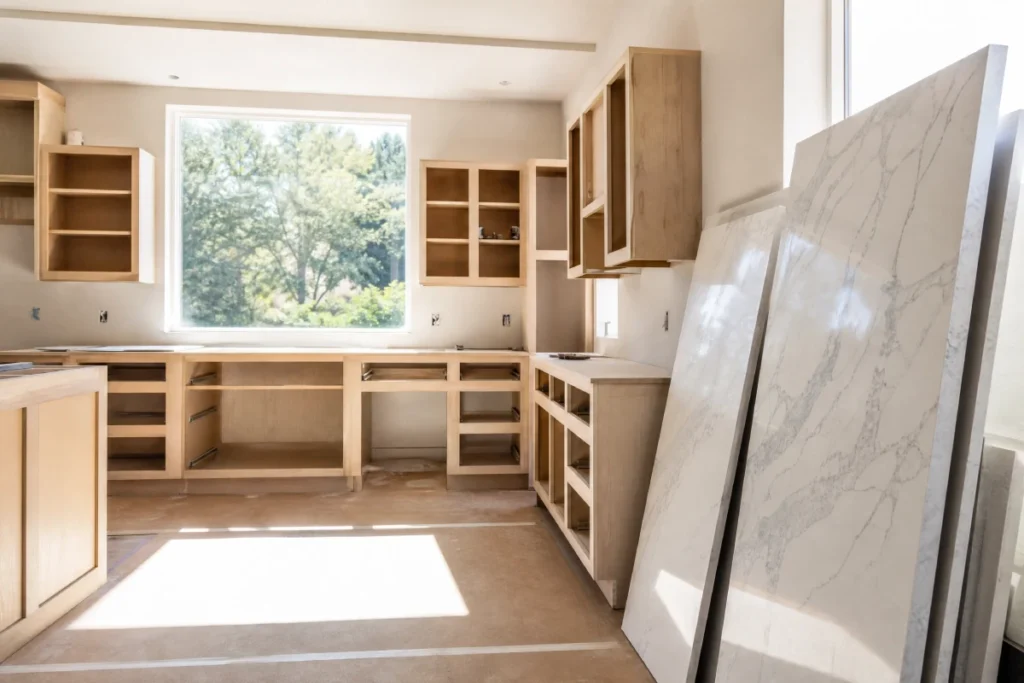
Cabinets typically make up 25–35% of total kitchen remodel cost — and in California, the options range from flat-pack IKEA builds to fully custom millwork at $1,500+ per linear foot.
Your three real options:
1. Cabinet refacing ($4,000–$10,000). You keep the existing cabinet boxes and replace just the doors, drawer fronts, and hardware. Works well when the layout is fine and the boxes are solid. Not a solution if your cabinets are water-damaged or poorly placed.
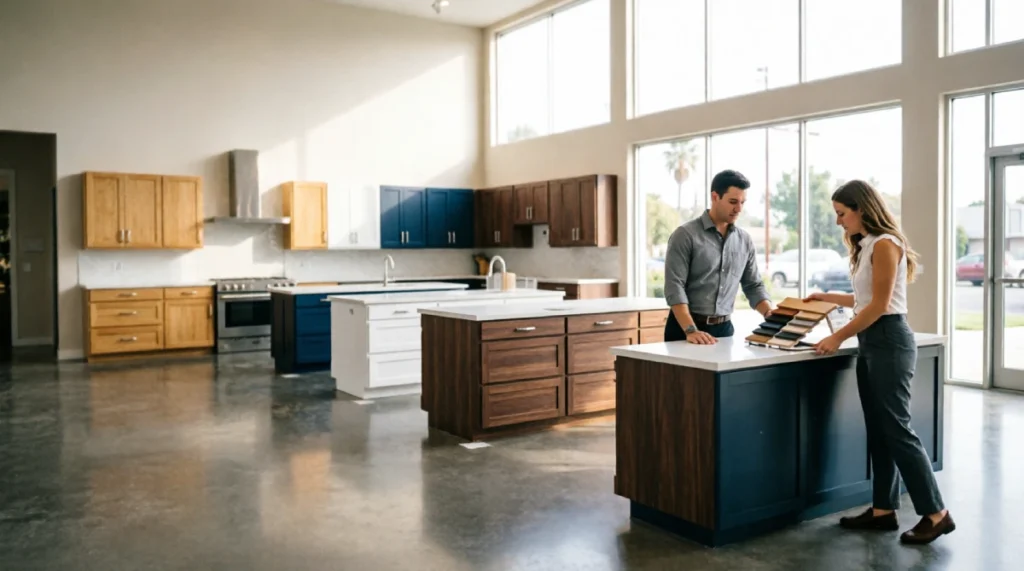
2. Semi-custom cabinets ($10,000–$22,000). This is where most California mid-range remodels land. You get real wood construction, more finish options, and sizes that actually fit your kitchen — not just 3-inch filler pieces everywhere. Brands sold through local dealers like Kitchen & Bath World in Fresno or kitchen showrooms throughout SoCal typically fall in this range.
3. Custom cabinets ($20,000–$50,000+). Built to exact specs by a local cabinet shop. If you have an oddly shaped kitchen — common in older California homes and San Francisco flats — this sometimes makes more sense than fighting with stock sizing.
The IKEA question: Many California homeowners in the $20,000–$30,000 budget range go this route, and it can work. The catch is installation — IKEA cabinets require precise installation to look right, and labor costs in California often close the gap with semi-custom.
Permits and the California Code Reality
This section doesn’t get enough attention in remodeling guides, and it’s where California homeowners get blindsided.
When do you need a permit?
- Moving or adding electrical circuits (almost always in a kitchen remodel)
- Relocating plumbing (even moving a sink 12 inches)
- Removing or modifying walls
- Adding or moving gas lines
When you might not:
- Replacing cabinets in the same footprint
- New countertops
- New flooring
- Painting
The permit process in California cities varies widely. In Sacramento, a kitchen remodel permit might take 2–3 weeks. In San Francisco, the same permit can take 3–6 months and require multiple department reviews.
Budget $1,500–$4,000 for permits and inspection fees. Factor in the time delay, especially in coastal cities. Contractors who tell you “we can skip the permit on this” are transferring risk to you. When you sell, unpermitted work shows up in disclosure requirements and can kill deals or force expensive retrofits.

What California Homeowners Usually Experience
The remodeling experience in California has a few consistent patterns worth knowing before you start.
- The contractor availability problem in the Bay Area and Los Angeles, good contractors are booked 3–6 months out. If someone can start next week, that’s worth investigating. Either they’re new, they’ve had a cancellation, or there’s something that made their last client walk away. This doesn’t mean you can never get a short-notice contractor; it means you should check references harder when you do.
- The scope creep reality: Opening up a California kitchen built in the 1960s–1980s often reveals knob-and-tube wiring, galvanized plumbing, or asbestos-containing floor adhesive. None of these is catastrophic, but all of them add cost. Experienced California contractors typically add a 10–15% contingency into their estimates; if yours doesn’t, build one in yourself.
- Climate considerations, Southern California homeowners often add ventilation upgrades during a kitchen remodel because cooking heat compounds the air conditioning load. Northern California homeowners in older homes often find insulation issues exposed during demo. These aren’t optional fixes; they affect both comfort and resale value.
- The HOA layer. Condo owners in California, especially in newer developments in Irvine, San Jose, or downtown San Diego, often need HOA approval before starting any remodel. This adds 4–8 weeks to the timeline and sometimes restricts what materials you can use on shared walls or flooring.

Common Mistakes California Homeowners Make
These aren’t abstract warnings — they’re patterns that show up repeatedly in California remodeling projects.
- Getting one bid, California contractor pricing varies wildly. A general contractor in Marin County charging $85,000 for a kitchen might be doing the same work as someone in Contra Costa County quoting $54,000. Get at least three written bids before deciding.
- Choosing the lowest bid without understanding why it’s low. Low bids in California usually mean one of three things: the contractor is new and building a portfolio, they’re leaving something out of the scope, or they plan to make it up on change orders. Ask what’s not included. That answer is more useful than the total number.
- Starting without a complete design, every undecided detail during construction becomes a change order. Change orders in California average 15–20% above the base contract rate. Make every decision, cabinet hardware, faucet, tile layout, appliance specs, before construction starts.
- Ignoring resale context, California home values vary so much by neighborhood that what’s worth spending $80,000 on in Palo Alto makes no financial sense in Stockton. The return on a kitchen remodel in California averages 60–80% nationally, but that average includes markets where a $60,000 kitchen remodel goes into a $400,000 home and markets where it goes into a $2.5M home. Know your number before you set your budget.
- 5. Underestimating the timeline. A mid-range kitchen remodel in California typically takes 6–12 weeks of active construction, plus 4–8 weeks of planning and permitting before that. Homeowners who go in thinking “6 weeks” and hit week 14 make bad decisions under pressure — rushing finish selections, approving change orders without scrutiny, accepting work that isn’t right.
DIY vs. Contractor in California: Where the Line Actually Falls
California isn’t the most DIY-friendly state for home improvement, but there are real places where doing it yourself saves significant money.
DIY makes sense for:
- Painting (save $2,000–$5,000)
- Backsplash tile installation (save $1,500–$3,000)
- Hardware swaps
- Appliance installation (if gas isn’t involved)
- Demolition (with proper disposal plan — California has strict construction waste rules)
Hire out:
- Electrical work — California requires licensed electricians for permitted work
- Plumbing — same licensing requirement
- Cabinetry installation, if you want it to look right
- Anything structural
One practical approach many California homeowners use: hire a general contractor for the structural, electrical, and plumbing work, then handle the finish work (paint, backsplash, hardware) themselves. This hybrid approach can save $5,000–$10,000 on a mid-range project.

FAQs
How much does a kitchen remodel cost in California?
Most California homeowners spend between $35,000 and $75,000 for a mid-range remodel. Lower-end cosmetic updates start around $15,000. Full custom renovations in high-cost markets regularly exceed $100,000. The main cost drivers are labor (40–50% of total), cabinets, and whether you’re changing the layout.
Is a kitchen remodel worth it in California?
In most California markets, yes — but the ROI depends heavily on what you’re spending and where the home is. In high-value markets like the Bay Area, a well-executed kitchen remodel adds real resale value. In lower-priced inland markets, overspending on a kitchen can put you above the neighborhood ceiling. Research comparable sold homes in your area before setting a budget.
Do I need a permit for a kitchen remodel in California?
Almost certainly yes, for anything beyond cosmetic updates. Electrical, plumbing, structural, and gas work all require permits. Cities like San Francisco, Los Angeles, and San Jose have active inspection programs. Unpermitted work creates problems at resale and can create liability if something goes wrong. Budget the permit cost from the start.
How long does a kitchen remodel take in California? From first contractor meeting to final walkthrough: typically 3–5 months total. The construction phase alone runs 6–12 weeks for a mid-range project. Permit approval in some California cities adds 4–8 weeks before construction even begins.
Can I reduce kitchen remodeling costs in California without sacrificing quality?
Yes — strategically. Keep the same layout (moving plumbing and electrical adds $5,000–$15,000). Choose semi-custom over full custom cabinets. Handle DIY-friendly finish work yourself. Get at least three bids. Buy appliances during holiday sales. Avoid making decisions mid-project that turn into change orders.
What’s the highest hidden cost in California kitchen remodels?
Structural surprises when walls open up, and permit-triggered upgrades. California’s Title 24 energy code can require ventilation, lighting, and insulation upgrades that weren’t in the original scope when you pull permits. Budget a 15% contingency on top of your contractor’s estimate.
Conclusion
Kitchen remodeling cost in California is genuinely higher than most of the country — and the gap is widening, not closing. Labor costs, permit requirements, and California’s building codes create real complexity that homeowners in other states don’t face.
That doesn’t mean you can’t remodel well within a realistic budget. It means you go in with accurate numbers, get multiple bids, factor in permits and a contingency, and make every decision before construction starts rather than during it.
The Pasadena couple from the beginning of this article? They ended up with a kitchen they love. But they’d have loved it just as much for $15,000 less if they’d understood California’s cost structure before they started. Don’t let that be your story.
