

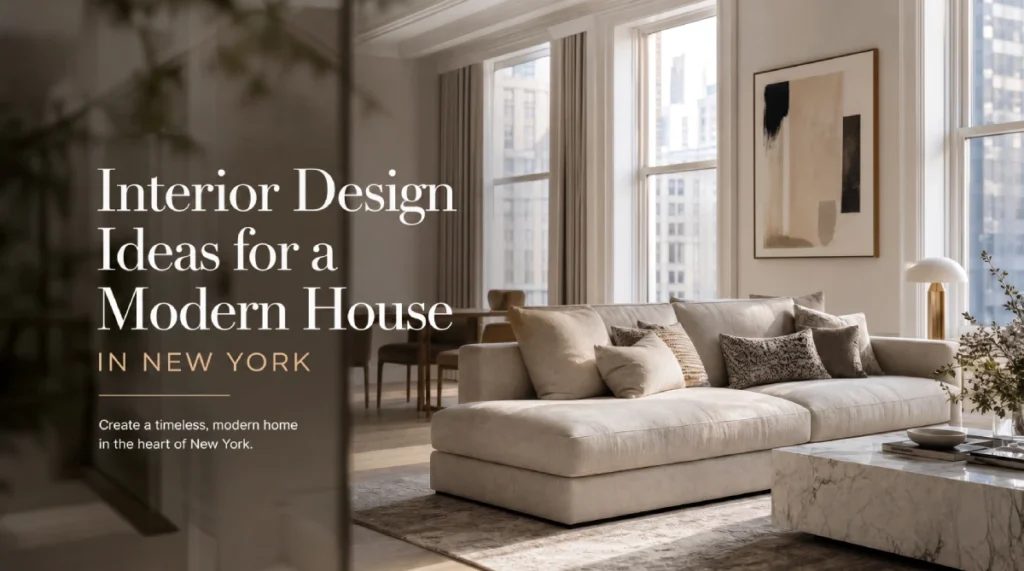
My neighbor on the Upper West Side spent close to $40,000 gutting her brownstone’s top floor — new flooring, custom cabinetry, the works — and ended up with a space that looked exactly like every other renovation on her block. Her contractor defaulted to what sold fast, not what fit the house. That’s a real and very common mistake in New York City, where labor is expensive, square footage is precious, and design decisions carry long-term weight.
This guide covers interior design ideas for a modern house in New York — not generic inspiration content, but practical direction you can actually use. Whether you’re working with a 1920s Park Slope townhouse or a newer build in Astoria, the principles here account for NYC’s unique constraints: tight rooms, older building bones, strict co-op board rules in some neighborhoods, and labor costs that run 30–50% above the national average.
You’ll find room-by-room strategies, real cost breakdowns in USD, common mistakes New York homeowners make, and guidance on when to bring in a licensed NYC contractor versus when a confident DIYer can handle it.
Understanding Modern Interior Design for Houses in New York
Modern interior design in New York isn’t a single look. It’s a set of decisions shaped by your house’s structure, your neighborhood’s character, and the practical limits of NYC building codes. A modern house in Flushing, Queens, has different bones than one in Carroll Gardens, Brooklyn — and both differ from a newer home in the suburbs of Staten Island.
That said, modern design in New York typically shares a few core principles:
- Open or semi-open floor plans where the structure allows
- Neutral base palettes (warm whites, greiges, soft grays) with intentional accent moments
- Natural materials — white oak, marble, linen — that age well in high-traffic urban homes
- Storage is built into the architecture, not added as furniture
- Lighting layers: ambient, task, and accent, working together
One thing I see New York homeowners repeatedly get wrong: they chase a Manhattan loft aesthetic in a house with load-bearing walls, low ceilings, and awkward room shapes. Knocking walls down in a pre-war New York house requires structural engineering approval and, in most cases, permits from the NYC Department of Buildings (DOB). Budget $2,000–$5,000 just for permits and engineering sign-off on a wall removal — that’s before any demo or construction costs.
The smarter move is working with the house’s existing layout and using design to make rooms feel more connected and spacious without structural changes.
Best Room-by-Room Design Approaches for Modern NYC Houses
Living Room
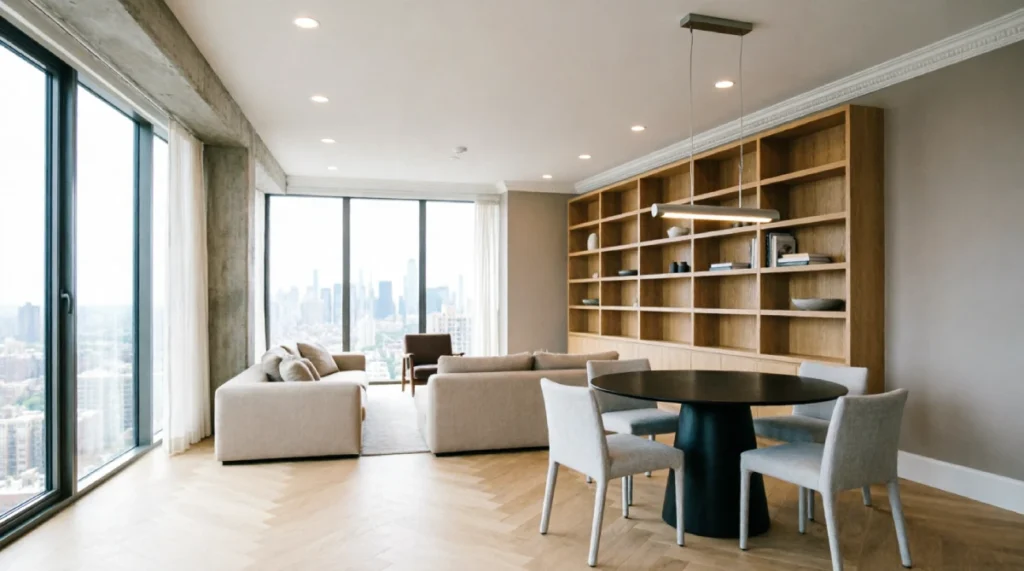
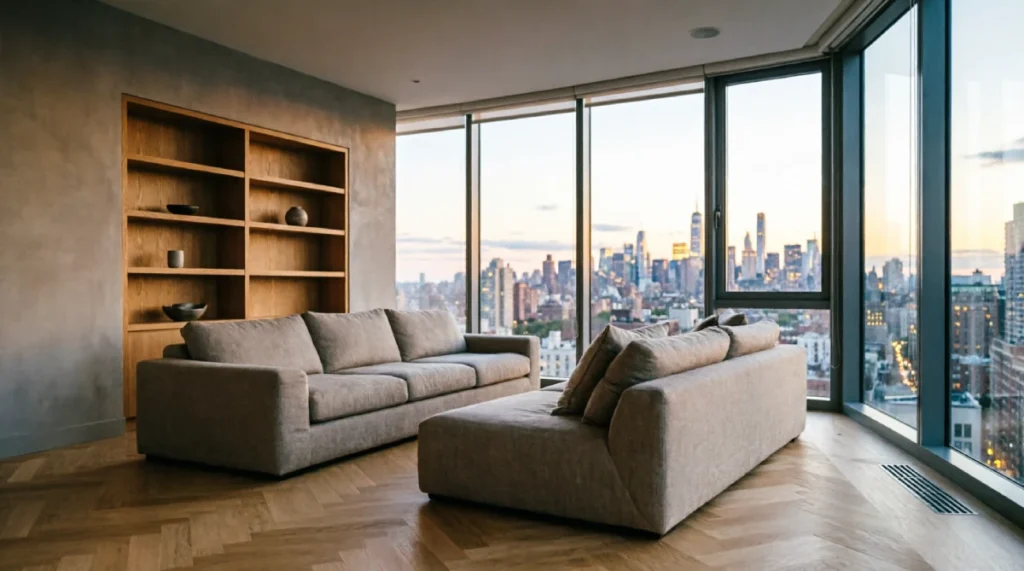
In most New York houses, the living room doubles as the primary social space and often connects to the dining area. The goal is to make it feel intentional without overcrowding it.
- Use a single large area rug (at least 8’x10′) to define the seating zone — this is the single most effective way to make a New York room feel larger
- Built-in shelving flanking a fireplace or TV wall gives storage without eating floor space
- Limit furniture to what the room actually needs. In NYC, the urge to fill space usually makes it smaller
- Wainscoting or board-and-batten on one accent wall adds architectural interest without a structural change
Kitchen
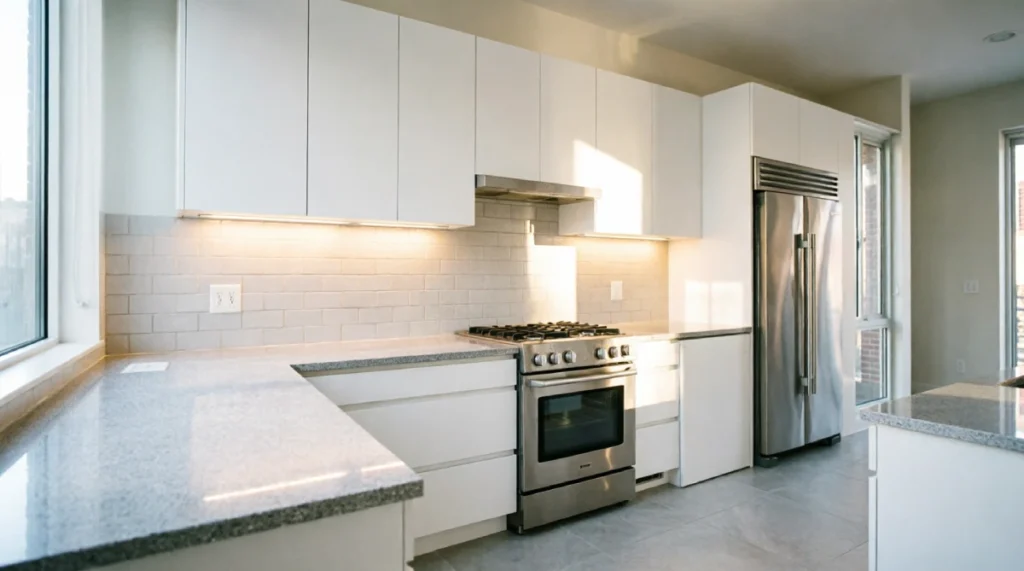
Kitchens in New York houses vary wildly — from galley-style rooms in older brownstones to larger open kitchens in newer builds. Modern kitchen design in NYC leans toward:
- Flat-panel or shaker cabinetry in muted tones (white, sage, slate gray)
- Quartz countertops over marble if you actually cook — marble stains and etches fast
- Under-cabinet LED lighting — functional and makes the space feel professionally designed
- A statement range hood if ceiling height allows — it anchors the whole kitchen
Expect NYC kitchen renovations to run significantly higher than national averages. A mid-range kitchen remodel in the five boroughs typically lands between $60,000–$100,000 when using licensed contractors. That includes cabinets, countertops, appliances, tile, and labor.
Bedrooms
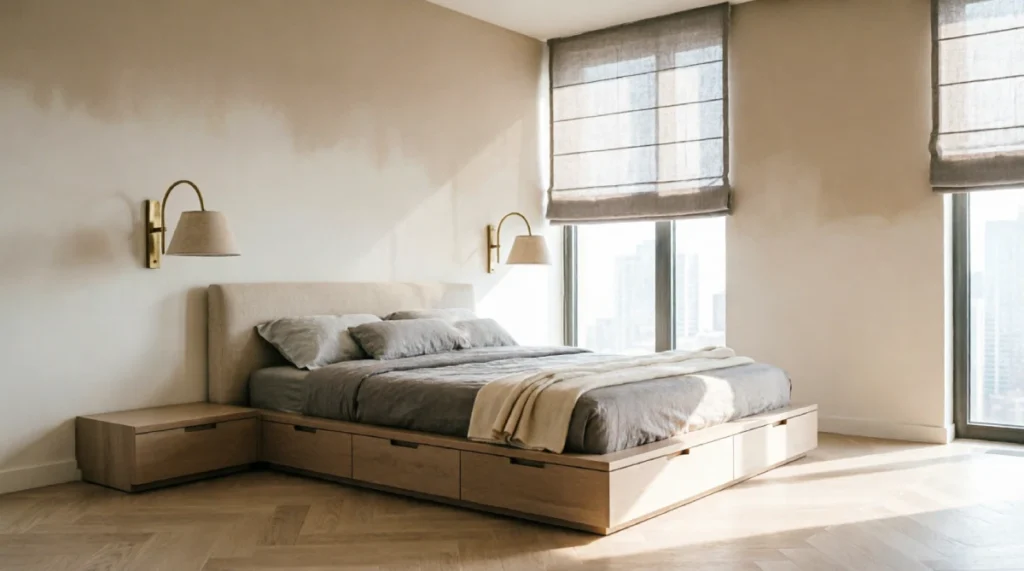
Modern bedroom design in a New York house prioritizes function. Most NYC bedrooms aren’t large. Design choices that work:
- Platform beds or beds with integrated storage eliminate the need for bulky dressers
- Wall-mounted sconces instead of table lamps free up nightstand space
- Built-in closets with custom organizers — Container Store’s Elfa system or IKEA PAX are common DIY options; fully custom built-ins run $2,500–$6,000 per closet from NYC contractors
- Blackout shades are non-negotiable in New York — street light and early sunrise will wreck your sleep without them
Bathrooms
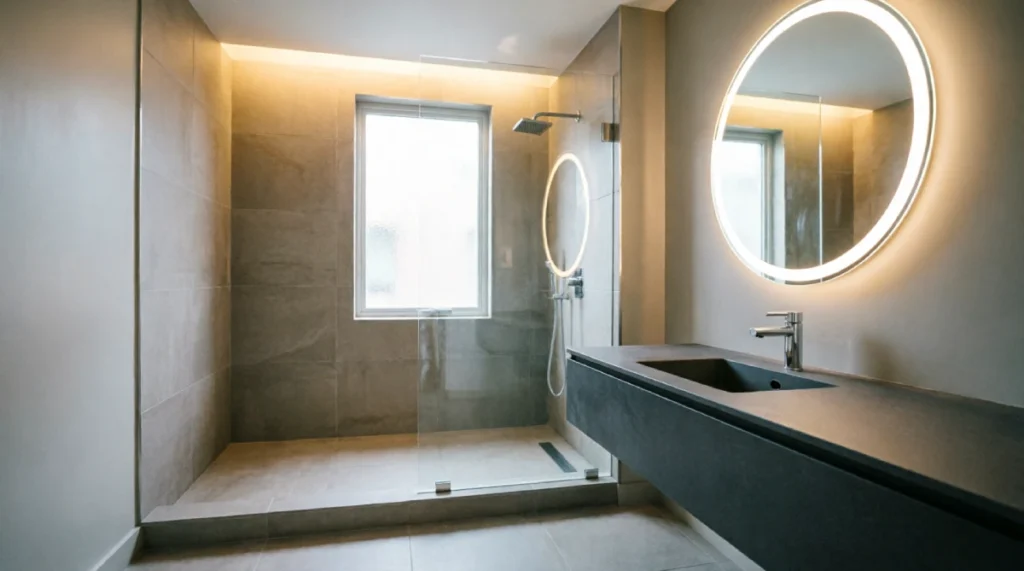
Bathroom design is where New York homeowners often overspend. Modern design doesn’t require floor-to-ceiling marble. What it does require is clean lines, good fixtures, and adequate lighting.
- Large-format tile (24″x24″ or larger) makes a small bathroom read bigger
- Floating vanities add visual floor space
- LED mirror with built-in lighting replaces the awkward bulb-strip fixture
- A curbless shower in a primary bath is the single upgrade that feels most modern
Cost Breakdown for Interior Design in a Modern New York House
These are real numbers based on current NYC contractor pricing. Labor in New York runs 30–50% above the national average, driven by union labor requirements on many projects, high overhead costs, and the general difficulty of working in dense urban environments (elevator access, parking, building management sign-offs).
| Design Area | Low Budget | Mid Budget | High Budget |
| Full Home Interior Design (3BR house) | $25,000–$45,000 | $60,000–$120,000 | $150,000–$300,000+ |
| Living Room Redesign | $5,000–$12,000 | $15,000–$35,000 | $40,000–$80,000 |
| Kitchen Renovation | $35,000–$60,000 | $65,000–$100,000 | $110,000–$200,000 |
| Primary Bathroom Remodel | $18,000–$30,000 | $35,000–$65,000 | $70,000–$150,000 |
| Bedroom (Built-ins + Refresh) | $4,000–$9,000 | $12,000–$25,000 | $30,000–$55,000 |
| Interior Designer Fee (NYC) | $150–$250/hr or 15–25% of project cost | Flat fee: $5,000–$20,000 | Full-service: $25,000–$75,000+ |
| Painting (whole house interior) | $8,000–$15,000 | $16,000–$25,000 | $26,000–$45,000 |
| Hardwood Flooring (install + material) | $12–$18/sqft | $19–$28/sqft | $30–$60/sqft |
NYC-specific cost notes:
- Union labor applies to many larger NYC renovation projects — factor in prevailing wage rates
- Building permits through NYC DOB add $500–$5,000+, depending on scope
- Co-op or condo board approval (if applicable) can add 4–8 weeks to your timeline
- Material delivery surcharges apply in Manhattan and parts of Brooklyn — budget $300–$800 extra
Common Mistakes New York House Owners Make with Interior Design
I’ve tracked these patterns across dozens of NYC renovation projects. They cost homeowners money and years of dissatisfaction.
1. Chasing trends instead of designing for the house
Curved furniture, limewash walls, and fluted cabinetry are all over design publications right now. Some of it works in New York houses. A lot of it doesn’t — especially in pre-war homes where the architecture has its own strong language. Trends cycle every 5–7 years. Your renovation will outlast several of them.
2. Underestimating NYC permit requirements
Moving a wall, adding a bathroom, and changing the electrical panel — these all require NYC DOB permits. Skipping permits doesn’t just expose you to fines. It creates problems at resale when buyers pull permit records. In New York City, unpermitted work is a real liability.
3. Hiring unlicensed contractors to save money
NYC requires contractors to be licensed through the Department of Buildings for most structural and mechanical work. Using an unlicensed contractor voids insurance, exposes you to liability if anyone is injured, and means permits can’t be pulled legally. The short-term savings rarely justify the risk.
4. Ignoring acoustics
Modern design often favors hard surfaces — concrete floors, tile, and minimal soft furnishings. In a New York house, this creates echo and noise transfer between floors. Area rugs, upholstered furniture, and acoustic panels (which can look intentional and designed) aren’t just comfort items — they’re functional in the NYC urban noise environment.
5. Over-lighting or under-lighting
New York houses often get one of two things: a single overhead light in every room, or an overspecified lighting plan that looks like a showroom. Neither works. Layer your lighting: ceiling ambient (recessed or a statement fixture), task lighting (under-cabinet, reading sconces), and accent lighting (cove, picture lights). A licensed NYC electrician will charge $85–$130/hour for lighting installation.
6. Skipping a professional interior designer entirely
Many homeowners try to manage a full interior renovation using only a contractor and Pinterest boards. For large projects ($60,000+), hiring an interior designer in New York almost always pays for itself through better material selection, contractor coordination, and avoiding costly do-overs. NYC designers typically work on hourly fees ($150–$250/hr) or project percentages (15–25% of the total project cost).
When to DIY vs. Hire a Contractor for Interior Design in New York
New York has clear rules about what licensed contractors must do — and strong incentives not to cut corners. That said, there’s meaningful work a capable homeowner can handle without touching anything structural or mechanical.
| Task | DIY Feasible? | Notes |
| Painting interior rooms | Yes | NYC apartments/houses are almost all painted by DIYers. Prep is everything. |
| Assembling flat-pack furniture | Yes | IKEA, CB2, West Elm — all DIY-friendly |
| Installing peel-and-stick backsplash tile | Yes | Lower-commitment option; real tile requires a licensed tiler for permits |
| Hanging wall shelves/art | Yes | Use a stud finder; NYC walls are often plaster, not drywall |
| Installing light fixtures (swap only) | Conditional | Swapping a fixture on an existing circuit: many DIYers do this. Adding circuits: licensed electrician required. |
| Flooring installation (click-lock) | Yes | Floating floors are DIY-able. Nail-down hardwood on NYC subfloors is better left to pros. |
| Structural wall removal | No | Requires a licensed contractor, a structural engineer, and a NYC DOB permit |
| Plumbing changes (moving fixtures) | No | NYC requires a licensed plumber and a DOB permit |
| Electrical panel upgrade | No | Licensed electrician and Con Edison coordination required |
| Kitchen cabinet installation | Conditional | Base cabinets: some DIYers can manage. Full kitchen: contractor recommended. |
For most New York house renovation projects, the practical split is: hire licensed contractors for anything structural, mechanical, or electrical; handle cosmetic work yourself to reduce labor costs.
Practical Interior Design Tips for New York Homeowners
- Start with lighting before anything else. A well-lit room with modest furniture outperforms a beautifully furnished room with bad lighting. Recessed LED lighting in New York houses typically costs $150–$250 per can installed by a licensed electrician.
- Shop sample materials before committing. New York showrooms (the D&D Building on 58th Street, BDDW in SoHo, or even Lowe’s and Home Depot in your borough) let you pull samples and test them in your actual space under your home’s light.
- Measure twice before buying furniture. NYC house rooms are rarely the standard sizes shown in showrooms. A sofa that looks right in a showroom can block a doorway in your actual home.
- Use mirrors deliberately — not everywhere. One large mirror on a wall opposite a window reflects light and genuinely makes a room feel larger. Mirrors scattered around look like a hotel lobby.
- If you’re painting, use peel-and-stick samples (Samplize or Backdrop offer these). New York light — especially in north-facing rooms or those surrounded by buildings — changes paint colors dramatically.
- For window treatments, blackout Roman shades or linen drapes hung high (close to ceiling height) and wide (beyond the window frame) are standard modern choices. Average NYC cost for custom drapes: $300–$800 per window installed.
- Budget a 15–20% contingency on any renovation. In NYC houses, especially pre-war buildings, surprises behind walls — old plumbing, knob-and-tube wiring, deteriorated plaster — are common and add cost.
- Get multiple bids. NYC has thousands of contractors. For any project over $10,000, get at least three written bids and verify each contractor’s NYC license through the Department of Consumer and Worker Protection (DCWP) database.
FAQs
How much does interior design cost for a modern house in New York?
Full-home interior design in a New York house runs $60,000–$300,000+, depending on scope and finish level. A single room redesign (living room or bedroom) typically costs $15,000–$50,000 when using NYC contractors and a professional designer. Interior designer fees alone run $150–$250/hour or 15–25% of the total project cost.
Can I DIY interior design work in a New York house?
Yes — for cosmetic work. Painting, furniture arrangement, soft furnishings, lighting fixture swaps on existing circuits, and peel-and-stick tile are all reasonable DIY projects. Anything structural (wall removal), mechanical (plumbing moves), or electrical (new circuits, panel work) requires licensed contractors and NYC DOB permits. The line between what you can and can’t legally DIY in New York is drawn by permit requirements, not personal ability.
Do I need a permit for interior design changes in New York?
It depends on what you’re changing. Cosmetic updates — paint, flooring, furniture, fixtures on existing circuits — don’t require permits. Structural changes (wall removal, adding a bathroom, moving a kitchen), electrical upgrades, and HVAC modifications do require NYC Department of Buildings permits. Permit fees vary by project but typically run $500–$5,000. Unpermitted work in NYC is a real risk at resale and can result in fines.
Is hiring an interior designer worth it for a New York house?
For projects over $50,000, yes — usually by a clear margin. A good NYC interior designer catches specification errors before they’re built, coordinates contractor schedules, has trade pricing on materials (typically 15–30% below retail), and keeps projects moving through the approval process. Their fee pays for itself most often through avoided mistakes and better material sourcing.
What design style works best for a modern house in New York?
There’s no single answer, but the most durable approach in New York houses is a neutral architectural base (white or warm gray walls, natural wood floors, clean trim) with personality added through furniture, textiles, and art. This approach photographs well for resale, ages better than trend-specific choices, and works across most New York house styles — brownstone, Colonial, ranch, or newer construction.
How do I work with an older New York house and still achieve a modern look?
Focus on what can be changed without touching the structure. Paint, lighting, flooring, cabinetry, and hardware updates do the most work for the money in pre-war New York houses. Preserve original details that have character — wood moldings, arched doorways, original tile — and let the new modern elements contrast with them. The tension between old and new is what makes good New York house design distinctive.
Conclusion
Designing a modern house in New York comes down to a few clear decisions: how much structural change makes financial and practical sense, which rooms to prioritize given your budget, and whether to work with a professional designer or manage the project yourself.
The costs in New York are real and non-negotiable — labor, permits, and materials all run higher here than in most of the country. Plan for that from the start, build in a 15–20% contingency, and verify every contractor’s license before signing anything.
The best modern New York house interiors aren’t the ones that look like they came from a design magazine. They’re the ones that work well for the people who live there — functional, honest about the house’s architecture, and built to last through more than one trend cycle.
Start with one room, do it properly, and let that set the standard for everything that follows.
