

When my neighbor in Silver Lake finally got her own 540-square-foot apartment after years of renting with roommates, she was excited — until she moved her furniture in. The couch blocked the kitchen. The dining table made the living area feel like a hallway. And her bedroom barely fit a queen bed with room to walk around it.
This is the reality for a lot of people living in small apartments in Los Angeles. Whether you’re in a Koreatown studio, a West Hollywood one-bedroom, or a compact unit in Echo Park, LA apartments tend to run smaller than what most people picture when they think “California living.” High rents mean you’re often paying $1,800–$2,800/month for under 700 square feet.
The good news: compact doesn’t have to mean cramped. The right interior design choices — layout, light, storage, and material — can make a small apartment in LA feel significantly more livable. This guide covers practical, cost-conscious small apartment interior design ideas in LA that actually work in real units, not staged magazine shoots.
Understanding Interior Design for Small Apartments in Los Angeles
LA apartments come with their own set of quirks that affect design decisions. Most pre-1980s buildings in neighborhoods like Los Feliz, Mid-City, and Hollywood have older floor plans with choppy layouts — small separate rooms instead of open plans. Newer builds in Downtown LA, Culver City, and Koreatown tend to have more open concepts but thinner walls and less natural light due to high-rise density.
A few LA-specific factors to keep in mind:
- Natural light varies by building age and orientation. Many older LA apartment buildings have north-facing units or interior-facing windows that get minimal direct sun. Your design choices need to account for this.
- Seismic requirements affect what you can permanently install. In California, landlords and tenants have limits on what can be bolted to walls or structurally modified without permits. Freestanding furniture and non-permanent storage solutions are often the smarter path.
- Title 24 energy codes influence lighting fixtures in newer buildings, so if you’re replacing light fixtures, make sure replacements are Title 24 compliant.
- LA renters often can’t paint or modify. Most leases in the LA rental market restrict wall alterations, which means design has to work harder through furniture, textiles, and removable solutions.
These constraints aren’t obstacles — they’re the starting point for making smart design decisions.
Best Approaches to Small Apartment Interior Design in LA
1. Use Vertical Space Aggressively
In a 500–700 sq ft apartment, floor space is the scarcest resource. The solution is to move storage and visual weight upward.
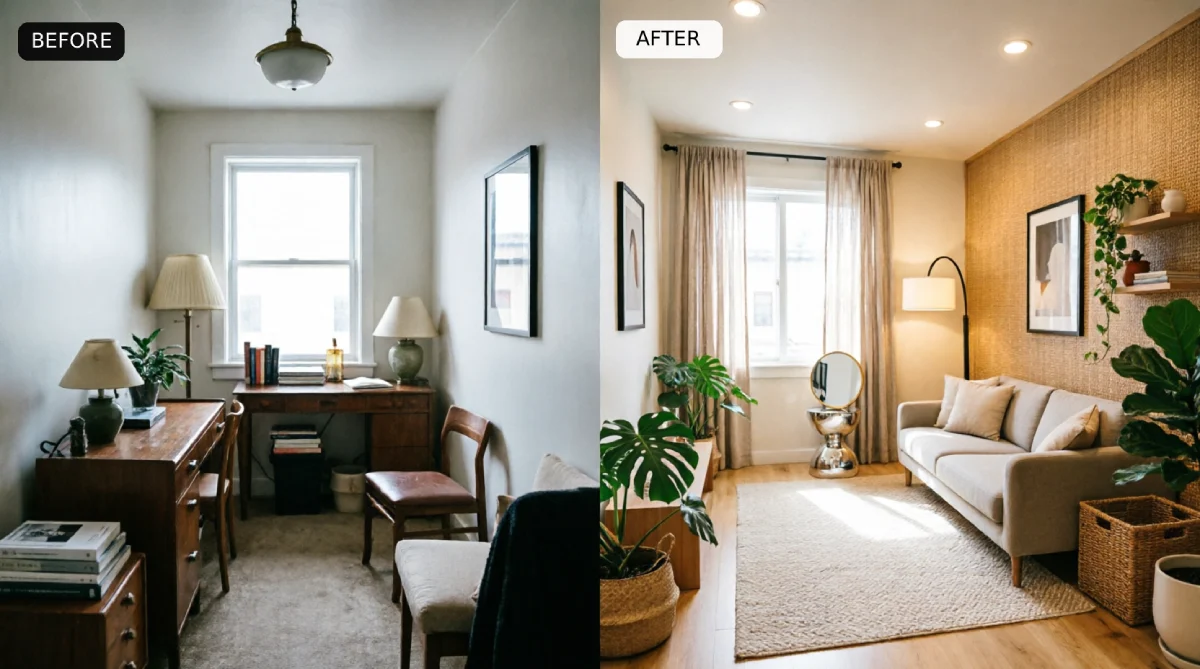
- Floor-to-ceiling open shelving (freestanding, no drilling required) draws the eye up and makes ceilings feel higher
- Tall bookshelves used as room dividers create zones without walls
- Mounted floating shelves — where your lease allows — replace bulky side tables and entertainment units
- Lofted beds in studio apartments free up the entire floor footprint for living and working space
2. Choose Multi-Function Furniture First
In a compact LA apartment, every piece of furniture should do at least two things. Single-purpose furniture is a luxury you can’t afford in 550 square feet.
Practical options:
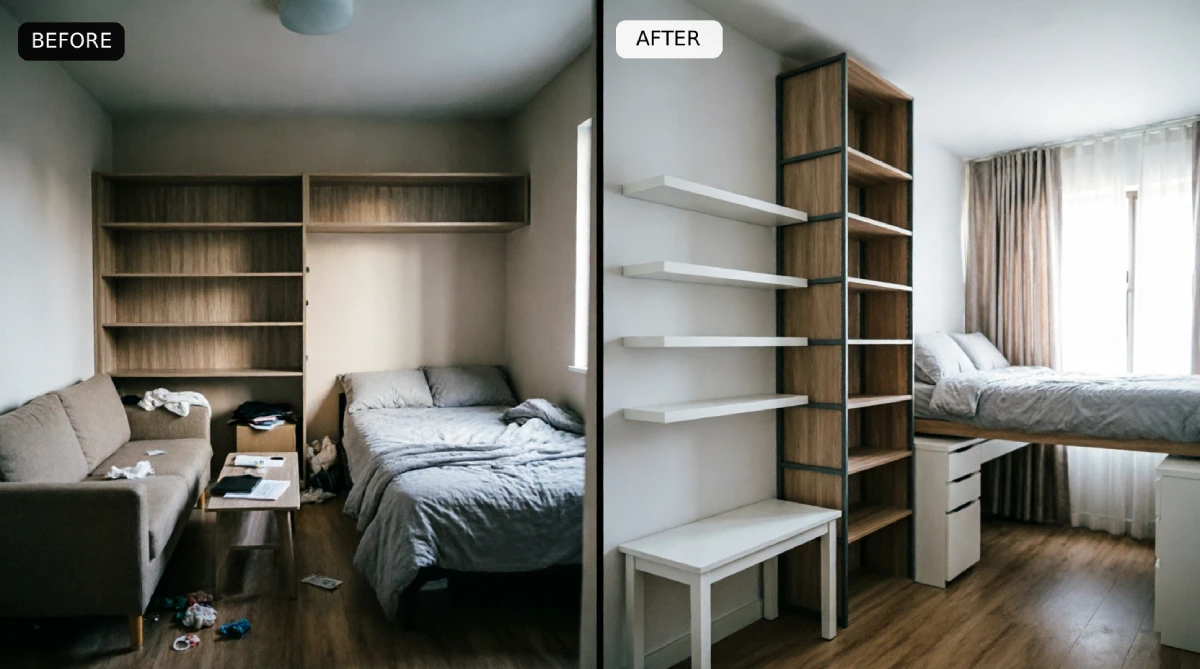
- Sofa beds or sleeper sofas for studio layouts
- Ottomans with internal storage
- Dining tables that fold against the wall (Murphy-style or wall-mounted drop-leaf)
- Beds with under-frame storage drawers
- Desks that double as vanity tables in bedroom/office combos
IKEA’s KALLAX and FJÄLLBO systems, available at the Burbank or Covina IKEA locations, are popular in the LA apartment market specifically because they’re modular, relatively cheap, and easy to configure.
3. Control Color to Expand Visual Space
Light colors make rooms feel larger — that’s not new advice. But how you apply it in an LA apartment matters.
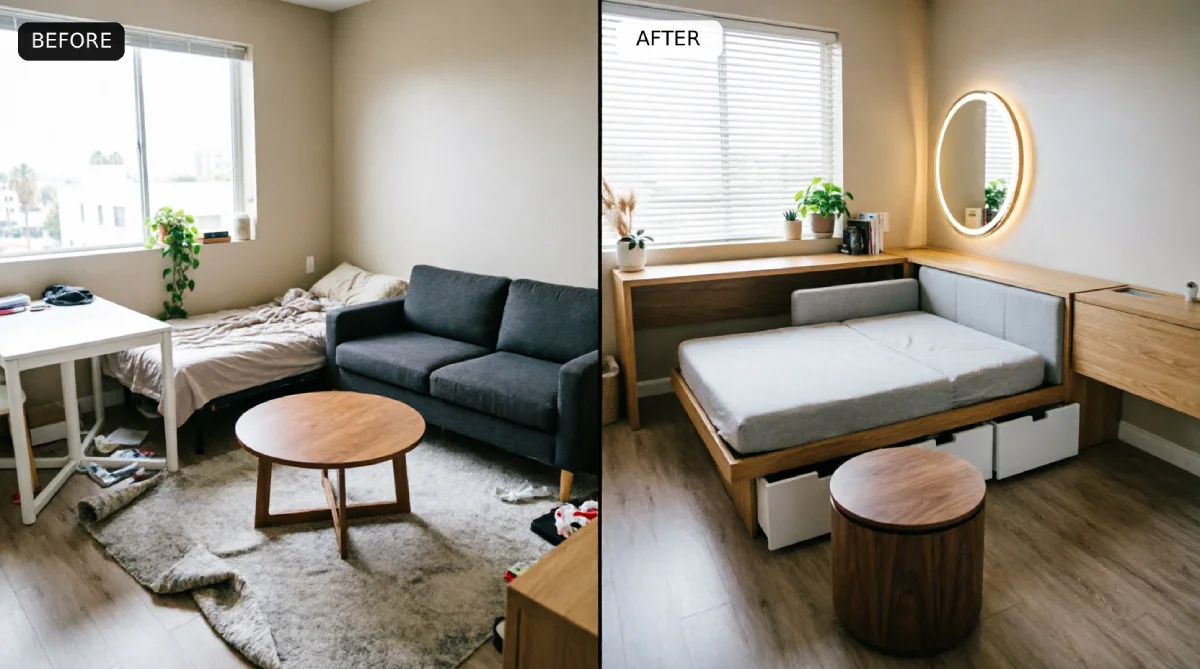
- Walls: Off-white, warm ivory, or light greige tones work better than stark white in units with limited natural light. Stark white without sunlight reads as cold and flat.
- Ceilings: Paint ceilings the same color as walls or slightly lighter — don’t go darker. Dark ceilings compress the room.
- Floors: If you have the option (owned unit or landlord approval), lighter wood tones or light gray LVP flooring opens up the floor plane visually.
- Accent colors: Use one consistent accent color — a dusty terracotta, muted sage, or warm navy — across pillows, artwork, and small decor. Too many accent colors in a small space create visual noise.
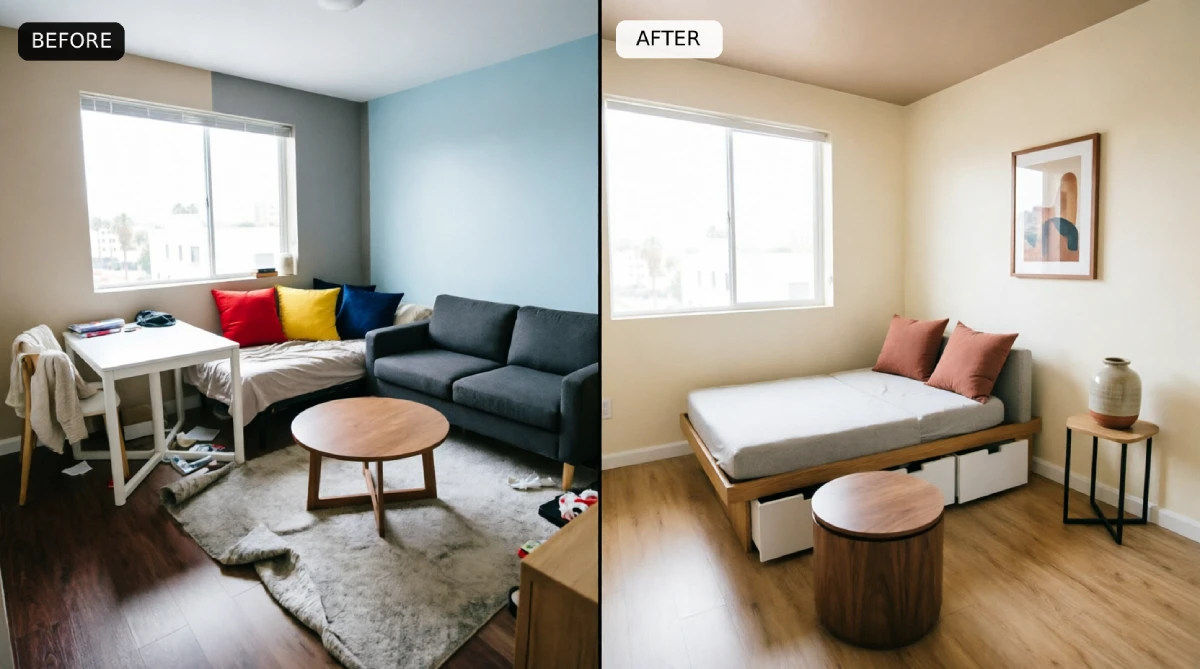
4. Address Lighting in Multiple Layers
Many LA apartments — particularly older buildings in Hollywood, Silverlake, or the Westside — have minimal overhead lighting. A single ceiling fixture in the center of the room is both functionally inadequate and visually unflattering.
Layer your lighting:
- Ambient: Floor lamps in corners fill the room without overhead glare
- Task: Desk lamps, under-cabinet kitchen lighting, bedside reading lights
- Accent: LED strip lighting under shelving or behind a TV panel adds depth and dimension
Avoid heavy, dark lampshades — they absorb light. In a low-light apartment, go with linen or light diffusing shades.
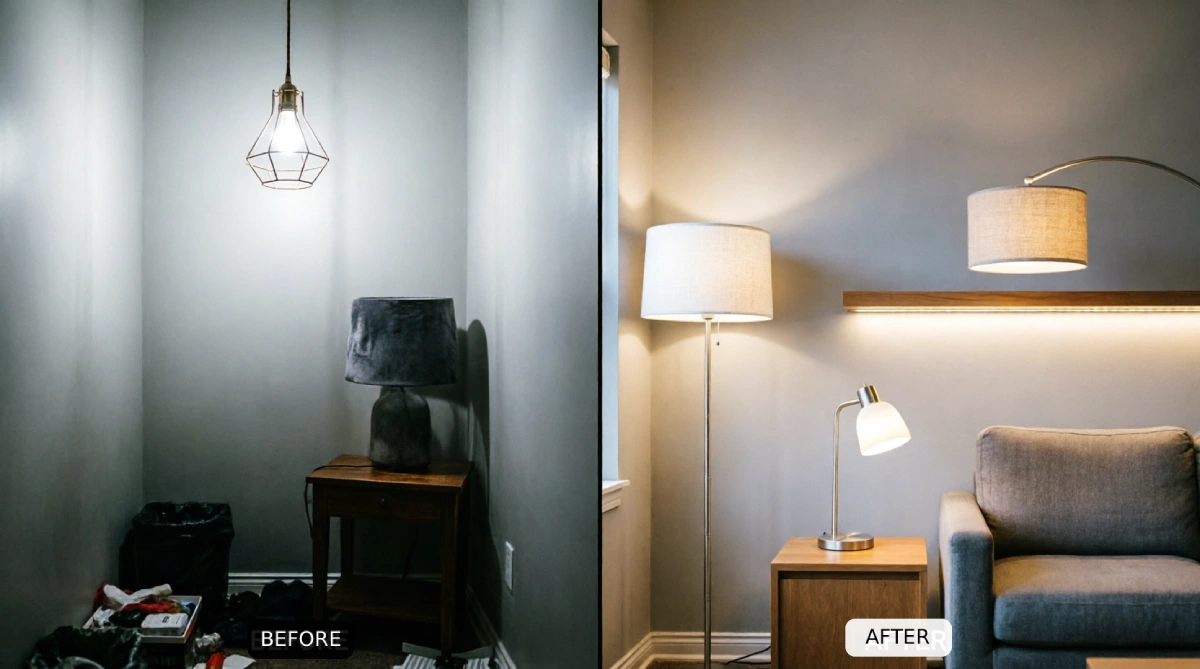
5. Define Zones in Open-Plan Layouts
Studio and open-plan one-bedroom apartments in LA need visual zones — otherwise the space feels like one undifferentiated room that doesn’t work well for anything.
Define zones using:
- Area rugs (one per zone — living, sleeping, dining)
- Furniture placement as dividers
- Lighting differences between zones
- Ceiling treatments (a simple canopy over a bed area, for example)
The goal is for each zone to feel intentional, not accidental.
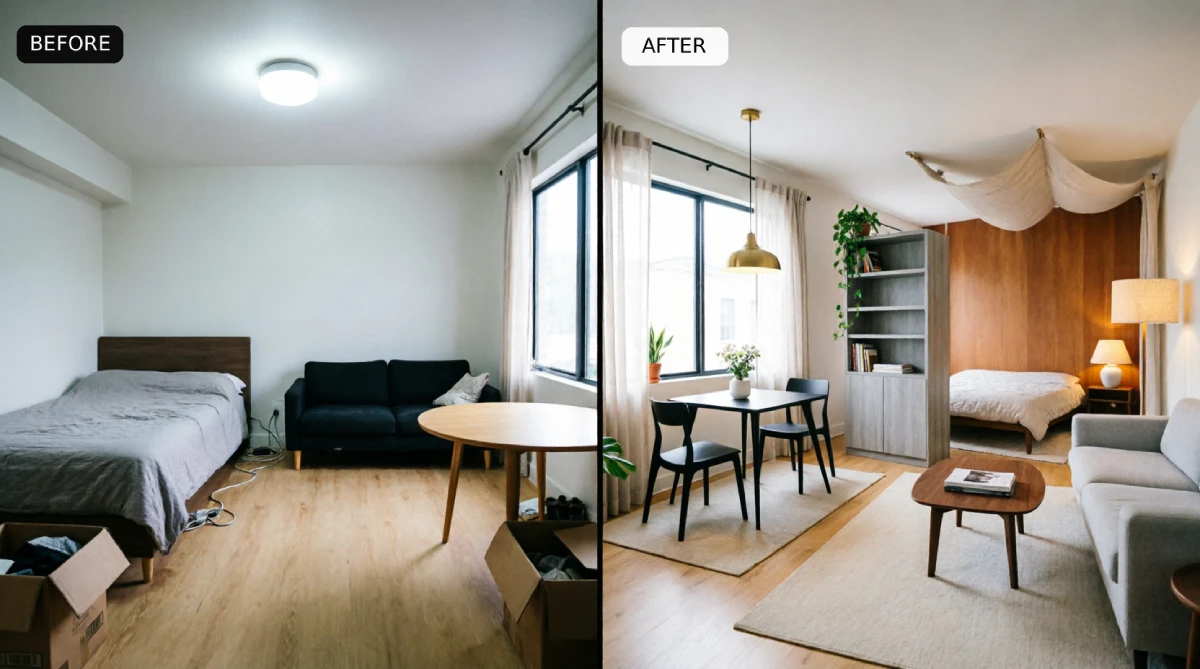
6. Maximize Natural Light Where You Have It
If your unit has good light exposure — south or west facing in an LA apartment is valuable — design around it, not against it.
- Keep window areas clear of bulky furniture
- Use sheer curtains instead of blackout panels in living areas
- Place mirrors on the wall opposite windows to bounce light through the room
- Avoid dark, heavy window treatments that eat light
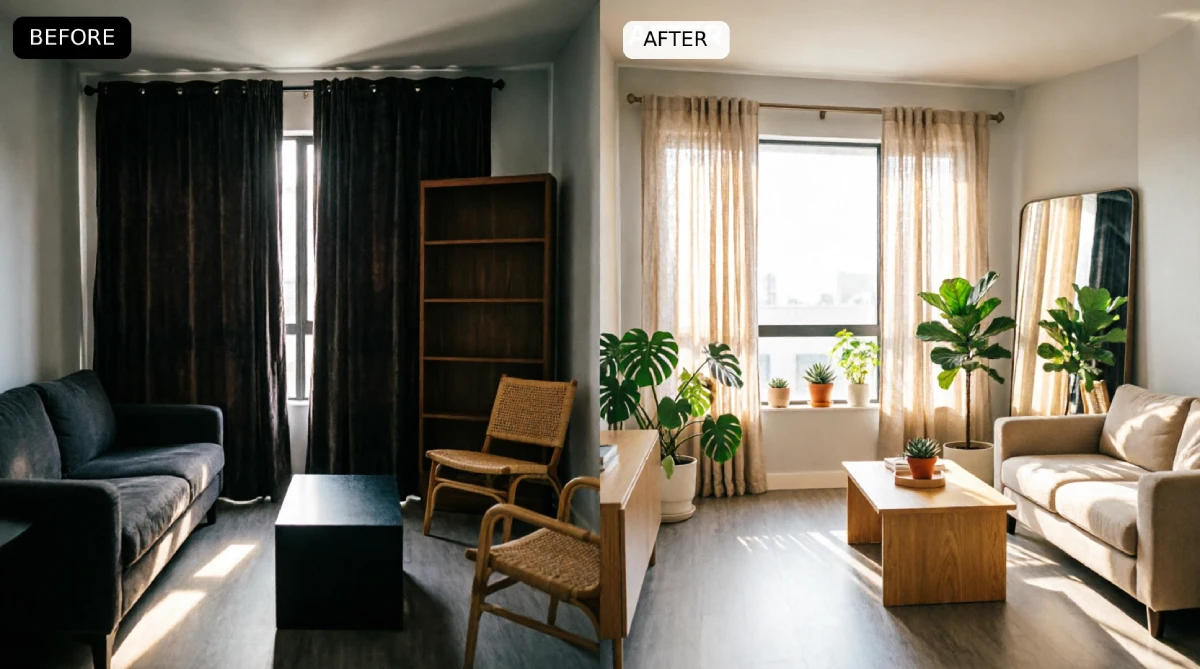
7. Handle Storage Before Anything Else
Clutter is the fastest way to make a small apartment feel smaller. Storage planning should happen before you make any aesthetic decisions.
In LA apartments specifically:
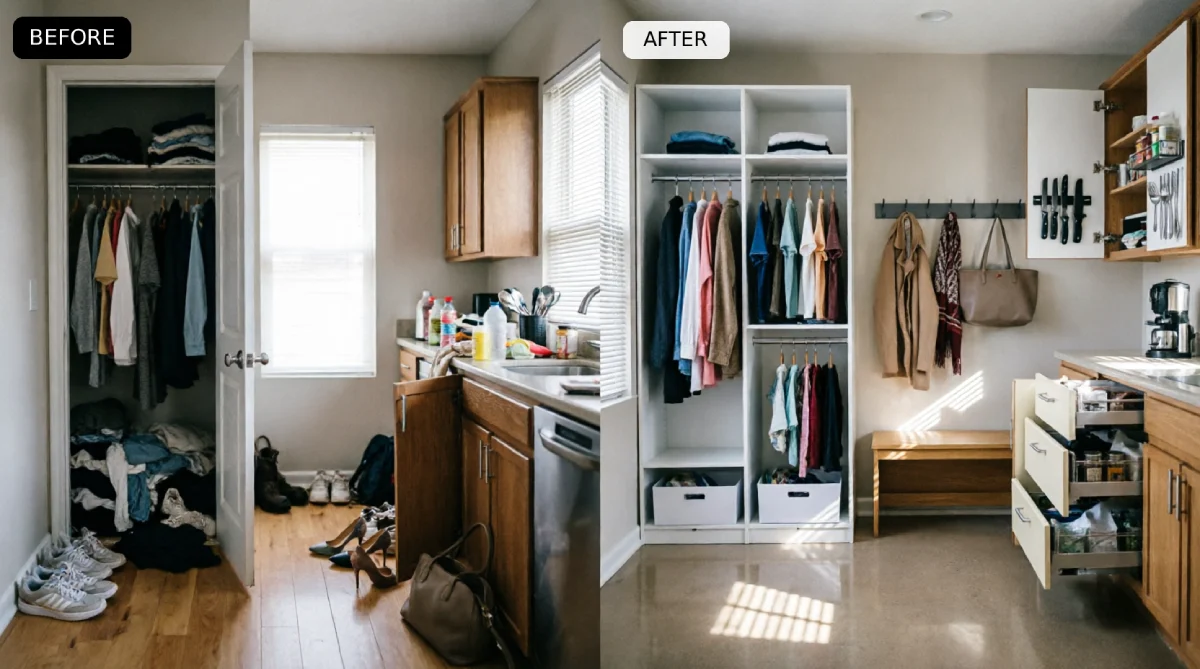
- Closets are often small and poorly organized — a $150–$400 closet organizer system from The Container Store or Home Depot will pay back its cost immediately in usable space
- Entryways are usually minimal or nonexistent — a wall-mounted hook rail and a bench with under-storage solves this
- Kitchen cabinets in older LA apartment buildings tend to be high and deep — pull-out shelf organizers and cabinet door organizers (both available at Lowe’s) recover dead space
Cost Breakdown for Small Apartment Interior Design in Los Angeles
| Item | Low Budget | Mid Budget | High Budget |
|---|---|---|---|
| Furniture (full apartment) | $1,200–$2,000 | $3,500–$6,000 | $10,000–$20,000+ |
| Lighting upgrades | $150–$300 | $500–$1,000 | $1,500–$3,000 |
| Storage solutions | $200–$500 | $800–$1,500 | $2,500–$5,000 |
| Window treatments | $100–$250 | $400–$900 | $1,500–$4,000 |
| Area rugs | $80–$200 | $300–$700 | $1,000–$3,500 |
| Removable wallpaper/wall decor | $50–$150 | $200–$500 | $800–$2,000 |
| Interior designer consultation (LA) | N/A | $150–$300/hr | $300–$500/hr |
| Full apartment redesign (designer-led) | N/A | $3,000–$8,000 | $15,000–$40,000+ |
LA-specific cost note: Labor in Los Angeles runs 20–40% above the national average. Interior designers in LA charge $150–$500/hour depending on experience and neighborhood. If you’re hiring a staging or design professional in Beverly Hills or Brentwood, expect the top end of these ranges. In neighborhoods like Boyle Heights or South LA, independent designers often work closer to $100–$150/hour.
For most LA renters doing a budget refresh, a realistic total spend for a well-designed 550–700 sq ft apartment lands between $2,500–$5,000, doing most of the sourcing yourself.
Common Mistakes Small Apartment Renters Make in Los Angeles
- Buying oversized furniture for the space they wish they had. A sectional sofa that fits a 1,200 sq ft Silver Lake bungalow will destroy the livability of a 600 sq ft Koreatown apartment. Measure first, buy second — always.
- Ignoring the entry point. Most LA apartments have an awkward front door that opens directly into the living area with no transition zone. Without a small visual and functional buffer — a rug, a hook, a bench — the whole apartment feels like it starts at the front door.
- Over-decorating to compensate for size. More stuff does not make a small space feel more homey. It makes it feel more crowded. Editing is harder than buying, but it’s the more important skill.
- Skipping the lighting layer. New tenants in LA apartments frequently rely on the existing ceiling fixture and wonder why the apartment feels dull and small. Lighting is the cheapest-per-impact design upgrade you can make.
- Assuming white walls are neutral. In a north-facing apartment with limited sunlight, pure white reads cold. Warm whites and off-whites (like Benjamin Moore White Dove or Sherwin-Williams Alabaster) read as neutral without the clinical edge.
- Ignoring California-specific lease restrictions before making changes. Installing a wall-mounted TV, drilling into tile, or modifying light fixtures without checking your lease can cost you your security deposit. In LA’s rental market — where deposits often run $3,000–$6,000 — this is a real financial risk, not a minor consideration.
When to DIY vs. Hire a Contractor for LA Apartment Design
Most interior design work in a rental apartment is non-structural and doesn’t require permits. But there are clear lines between what you should handle yourself and when to bring in a professional.
DIY is reasonable for:
- Furniture arrangement and selection
- Area rugs, curtains, and soft furnishings
- Freestanding shelving and storage systems
- Removable wallpaper (peel-and-stick options work well in LA’s dry climate)
- Swapping out cabinet hardware (usually lease-permitted if you keep originals)
- Adding floor lamps and plug-in lighting
Hire a professional for:
- Any electrical work — adding outlets, replacing fixtures, installing dimmer switches. In LA, electrical work in residential units requires a licensed electrician and often a city permit pulled through the LA Department of Building and Safety (LADBS).
- Built-in cabinetry or shelving that requires wall attachment in a rental context — you need written landlord approval first
- Flooring replacement in an owned unit (if you own your condo) — LVP or hardwood installation in LA runs $4–$10/sq ft installed, and seismic considerations can affect subfloor prep
For design consultation specifically — if you’re unsure how to lay out your apartment or pull a color palette together — a single 2-hour session with an LA-based interior designer ($300–$600) will give you more useful direction than weeks of scrolling Pinterest.
Practical Tips for Small Apartment Design in Los Angeles
- Measure your elevator and stairwell before ordering large furniture. LA apartment buildings — especially older ones in Hollywood and Koreatown — have notoriously small elevators. Many people have ordered sofas that couldn’t make it to their floor.
- Use removable peel-and-stick wallpaper for accent walls. LA’s low humidity makes peel-and-stick wallpaper more reliable here than in humid climates. Brands like Chasing Paper and Tempaper are available at Target and Anthropologie.
- Shop the LA Fabric District for custom curtains at low cost. If you need custom-length curtains (common in apartments with non-standard window heights), the Fashion District on Maple Avenue offers fabric at a fraction of retail cost.
- IKEA PAX wardrobes solve closet problems. In older LA apartment buildings with minimal closet space, a freestanding PAX wardrobe system ($300–$700 configured) adds significant storage without requiring any permanent installation.
- Use a cohesive wood tone throughout. Mixing too many different wood tones — light oak desk, dark walnut bed frame, honey-tone bookshelf — creates visual clutter in a small space. Pick one and stick to it.
- Consider renter-friendly flooring over ugly carpet. If your unit has old carpet, ask your landlord about replacing it with LVP — some LA landlords will split the cost or allow it as a lease-approved modification.
- Don’t underestimate what plants do for an LA apartment. LA’s climate makes it one of the easiest cities in the country to keep houseplants alive with minimal effort. A few well-placed plants add life, color, and perceived depth to a small space without taking up floor area.
FAQs
How much does it cost to redesign a small apartment interior in Los Angeles?
A DIY-led refresh — new furniture, lighting, rugs, and storage — realistically runs $2,500–$5,000 for a 500–700 sq ft LA apartment if you’re sourcing from IKEA, Target, and local stores. Hiring an LA interior designer to lead the project pushes that to $8,000–$25,000+, depending on the scope and the designer’s fee structure.
Can I DIY interior design in my LA rental apartment?
Most of it, yes. Furniture arrangement, removable wallpaper, lighting (plug-in), storage, and soft furnishings are all fair game. Anything involving drilling, electrical work, or permanent wall modifications requires either landlord-written approval or a licensed contractor with permits through LADBS. Don’t assume verbal permission counts — get it in writing.
Do I need a permit for interior design changes in a Los Angeles apartment?
For cosmetic changes — furniture, rugs, removable wallpaper — no. For anything involving electrical, structural modifications, or permanent fixture installation in an owned condo, yes. The LA Department of Building and Safety (ladbs.org) has an online permit lookup tool. For renters, the more immediate rule is your lease agreement, not the city permit process.
Is hiring an interior designer worth it for a small LA apartment?
A full redesign depends on your budget and how long you plan to stay. If you’re signing a 2+ year lease and spending $2,000+ on furniture anyway, a single design consultation ($300–$600) that prevents costly mistakes is usually worth it. Full-service design fees are harder to justify for short-term rentals.
What interior design style works best for small apartments in Los Angeles?
Styles that rely on light colors, minimal clutter, and clean lines perform best in compact LA spaces — Japandi, Scandinavian minimalism, and California casual (a relaxed, warm take on minimalism with natural materials) are all well-suited. Heavy traditional styles with dark furniture and layered textiles tend to compress small spaces further.
How do I deal with bad natural light in my LA apartment?
Layer artificial lighting — floor lamps, table lamps, and under-shelf LEDs — to compensate. Use warm-white bulbs (2700K–3000K) rather than cool-white, which makes low-light spaces feel clinical. Light-colored walls, mirrors opposite windows, and sheer curtains instead of blackout panels will get the most out of whatever natural light you do have.
Conclusion
Small apartment living in Los Angeles isn’t a compromise — it’s a design problem that has real, practical solutions. The key decisions come down to a few things: choosing furniture sized for your actual space, building storage before adding decor, getting your lighting right, and working within the real constraints of LA rental culture.
You don’t need a big budget to make a significant difference. A few hundred dollars in lighting, a closet organizer, and furniture arranged with intention will do more for your apartment’s livability than a $3,000 sofa in the wrong spot.
If your budget allows for any professional input, one focused design consultation with an LA-based interior designer is worth the cost. If not, start with layout and lighting — those two factors determine how everything else feels, and neither requires a contractor.
