

Introduction
My neighbor in Coral Springs bought her 1,100-square-foot home back in 2018. The bathroom, a tight 5×7, had peeling caulk, a pedestal sink with zero storage, and tiles that still looked like 1994. She kept putting off the remodel because she assumed it would blow her budget and tear apart her home for weeks.
She finally pulled the trigger last spring. Three weeks, $8,400, and the right contractor later, she had a bathroom that felt twice the size without touching a single wall.
That’s what smart remodeling looks like in a small Florida home. You’re not fighting a lack of square footage. You’re fighting poor layouts, wrong materials, and humidity that destroys the wrong finishes in 18 months flat.
Small bathrooms in Florida have a specific set of problems: moisture buildup, limited ventilation, outdated fixtures taking up valuable floor space, and tile work that can’t handle the constant humidity swings between a blasting AC and a steamy shower. The good news? Most of these problems have affordable, well-tested solutions — and you don’t need to gut the whole room to see a real difference.
This guide covers what actually works in small Florida bathrooms, what it costs, and where homeowners consistently make expensive mistakes.
Understanding Small Bathroom Challenges in Florida Homes
Florida homes — whether you’re in a 1970s ranch in Tampa, a Miami condo, or a newer build in Orlando’s suburbs — share a common set of bathroom problems that homeowners in, say, Colorado or Minnesota simply don’t deal with.
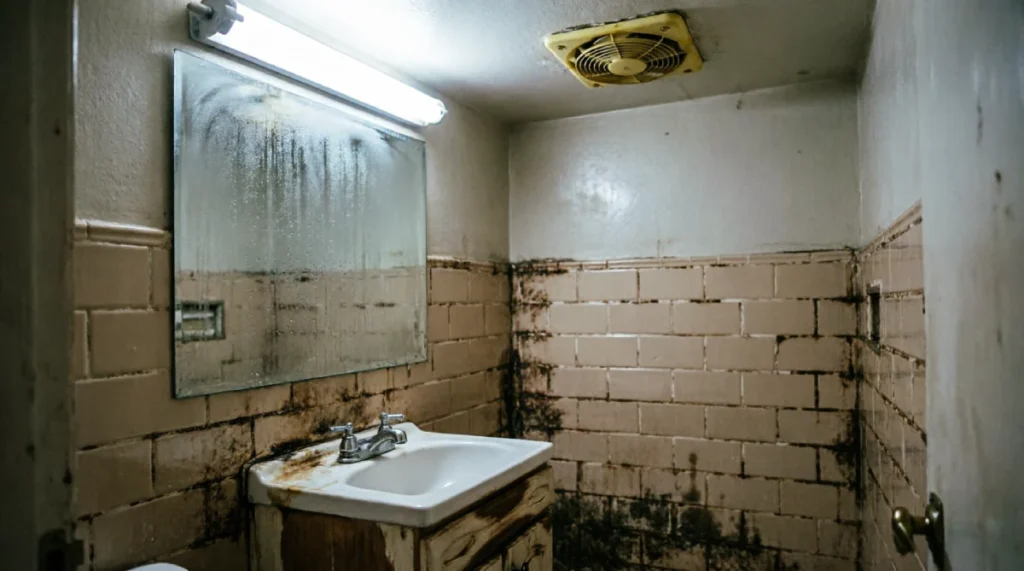
- Humidity is the main enemy. Florida averages 74–80% relative humidity year-round. Your bathroom ventilation fan isn’t optional. It’s structural maintenance. Without proper airflow, mold grows behind drywall, grout darkens within months, and wood vanity cabinets warp and swell.
- Small floor plans are common. Post-war Florida homes were built tightly. Bathrooms in the 45–55 square foot range are standard. In newer condo developments in Fort Lauderdale or St. Pete, guest bathrooms can be as small as 35 square feet.
- AC creates temperature swings. Stepping from a 72°F interior into a hot shower means constant condensation. Materials that work fine in dry states crack, bubble, or peel under this cycle in Florida.
What this means practically:
- Porcelain tile outperforms ceramic for Florida bathrooms — it’s denser, absorbs less moisture, and handles temperature changes better
- Exhaust fans should be rated at a minimum of 110 CFM for bathrooms under 60 sq ft in Florida
- Floating vanities — wall-mounted rather than floor-standing — free up visual and physical floor space while also making cleaning easier and reducing moisture trapping at the base
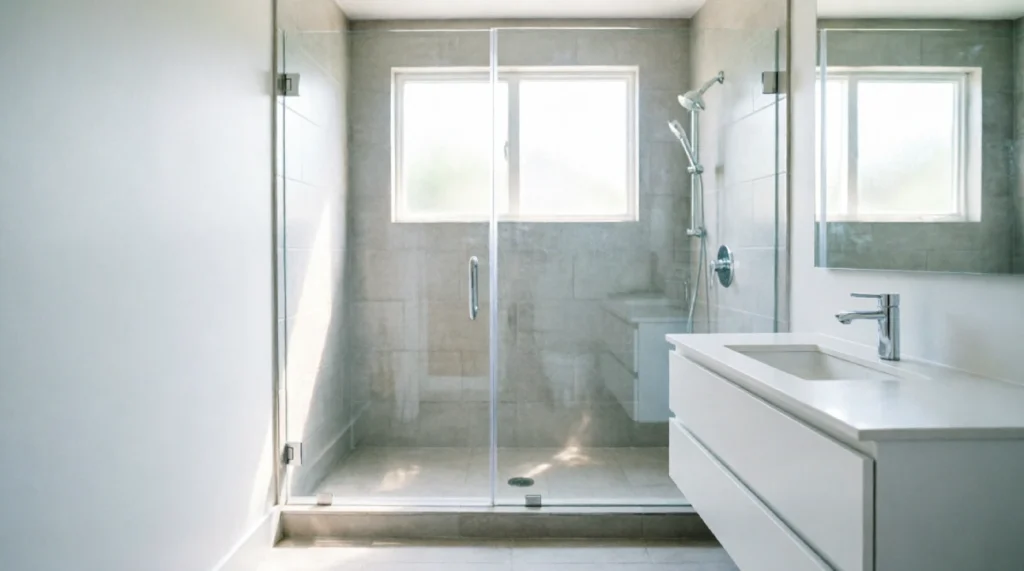
- Glass shower enclosures work better than curtains in small Florida bathrooms because they don’t retain moisture, and they open up sightlines
These aren’t aesthetic preferences. In Florida’s climate, they’re practical decisions with real cost consequences if you get them wrong.
Best Kitchen and Bathroom Remodel Ideas That Work in Small Florida Spaces
The single biggest mistake Florida homeowners make is copying bathroom remodel ideas from national home improvement content that wasn’t written for a hot, humid, coastal climate. Here’s what actually produces results in a small Florida bathroom.
1. Replace the Tub with a Walk-In Shower
This is the most impactful change you can make in a small Florida bathroom, both for function and resale value.
A standard 5-foot bathtub eats 15–18 square feet of floor space. Converting it to a 36×36 or 36×48 walk-in shower frees up 6–10 square feet, which in a 50-square-foot bathroom is a massive perceptual and functional shift.
- Cost range: $2,200–$6,500, depending on tile, glass door quality, and plumbing relocation
- Florida-specific consideration: Use large-format porcelain tile (12×24 or larger) on the shower walls. Fewer grout lines = fewer places for mold to anchor
- Permit note: In most Florida counties, tub-to-shower conversions require a plumbing permit. Broward, Miami-Dade, and Orange County all require one. Budget $150–$300 for the permit and factor in your contractor’s time for the inspection
2. Install a Floating Vanity
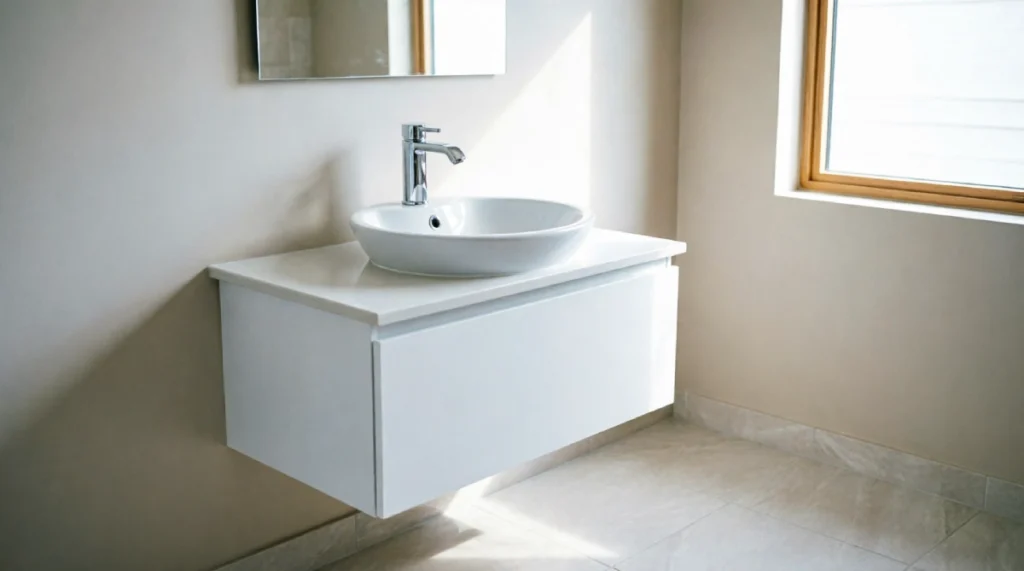
Floor-mounted vanities trap moisture at the base. In a Florida bathroom with tile floors and high humidity, that junction point is where mold starts. A wall-mounted floating vanity sits 15–18 inches off the floor, exposes the full tile field, makes the room look larger, and eliminates the base moisture problem.
- Cost range: $600–$2,400 installed (vanity + wall mounting hardware + plumber for drain relocation if needed)
- For very small bathrooms (under 45 sq ft): Consider a 24-inch vanity with integrated storage rather than a 36-inch unit. You gain floor space, and the room reads as significantly larger
- Practical note: Wall studs in Florida block construction homes (common in Miami and coastal areas) require specific mounting hardware. Not every handyman knows this — confirm your contractor has experience with CBS (concrete block structure) homes
3. Large-Format Porcelain Floor Tile
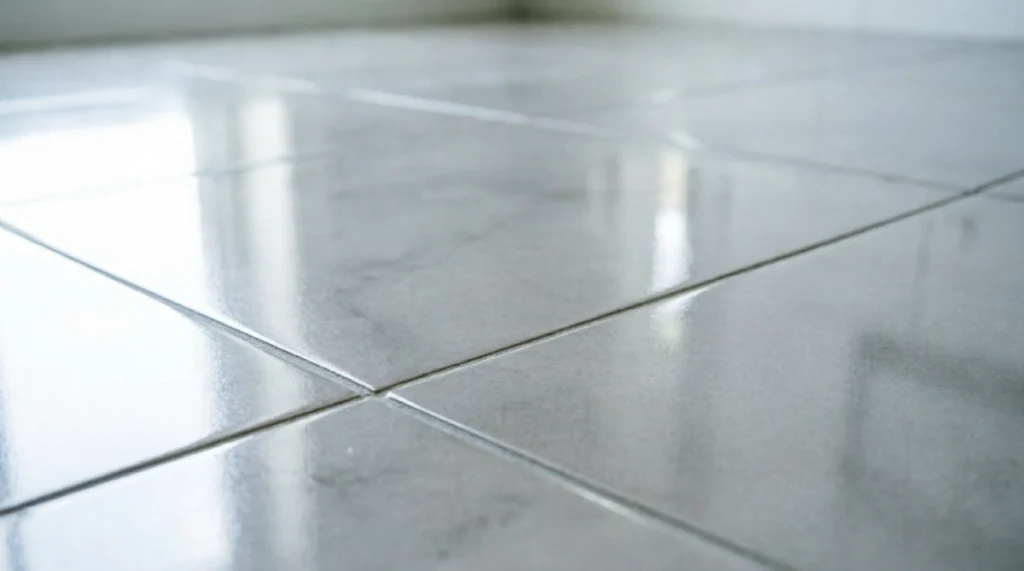
Small tile = more grout lines = more mold opportunity in Florida. Going with a large-format porcelain tile (at minimum 18×18, ideally 24×24) on the floor does two things: it reduces grout maintenance, and it makes the floor look larger.
Light-colored tile (warm white, light gray, soft beige) reflects light and visually expands the space. Dark tile does the opposite.
- Cost range: $4–$12 per square foot for tile material; $7–$14 per square foot installed
- At a typical 50 sq ft bathroom floor: Expect $600–$1,100 total for floor tile installed
- DIY note: Large-format tile requires a flat substrate. Florida slab foundations can have minor unevenness. If your floor has any flex, a professional installation with a self-leveling compound is worth the cost — cracked large tiles are expensive to replace
4. Upgrade Ventilation
This is the most overlooked upgrade in Florida bathroom remodels — and the one with the highest return in terms of preventing future damage.
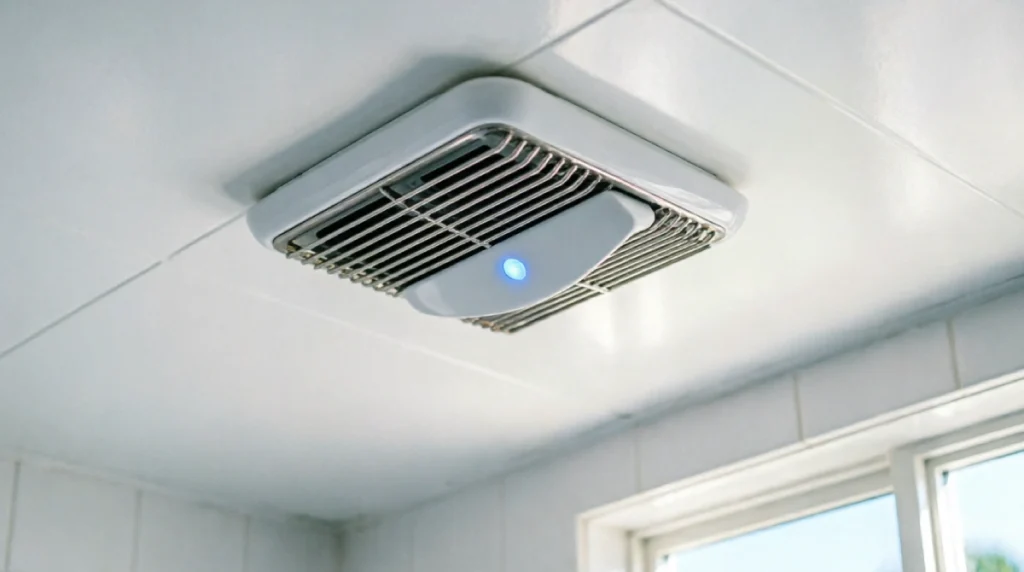
A 50-year-old Florida home likely has a 50–70 CFM exhaust fan. Code minimum in Florida is now 50 CFM, but that’s inadequate for a steamy shower in high humidity. Replace it with a 110–130 CFM unit with a built-in humidity sensor. The sensor runs the fan automatically when moisture spikes, even if the homeowner forgets to turn it on.
- Cost range: $120–$350 for a quality humidity-sensing fan (Broan, Panasonic, or Delta are reliable options)
- Installed cost: $200–$450, including an electrician if a new circuit or additional wiring is needed
- ROI: Prevents mold remediation costs that routinely run $1,500–$4,000 in Florida homes
5. Frameless Glass Shower Enclosure
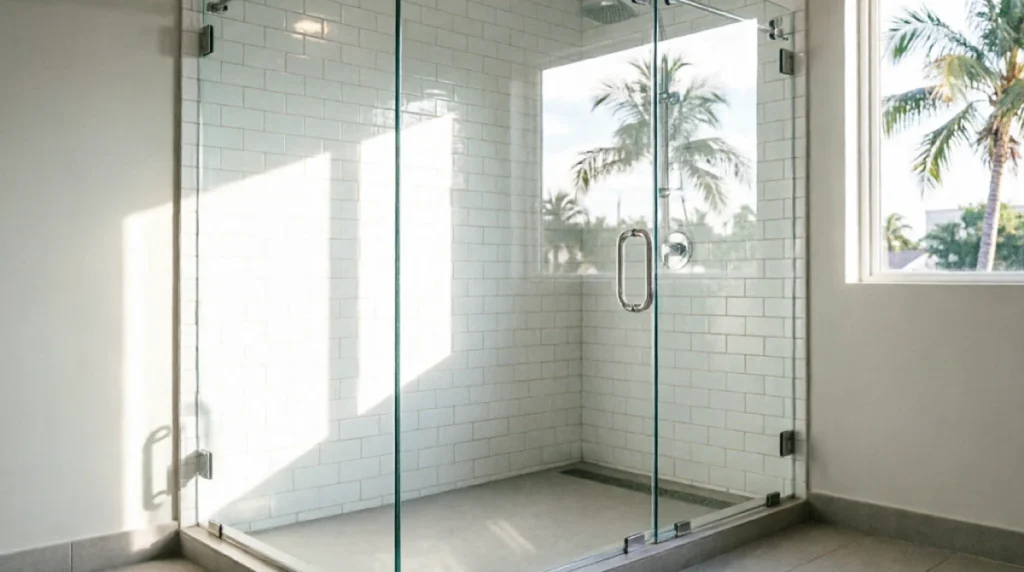
Heavy metal-framed shower doors collect mold at every joint. In a small Florida bathroom, that’s both a visual and a hygiene problem. A frameless glass enclosure — either a hinged door or a fixed panel with a walk-in opening — eliminates most of those joints, is easier to clean, and makes the shower feel like part of the room rather than a boxed-off corner.
- Cost range: $900–$2,800 installed, depending on glass thickness and configuration
- Semi-frameless options run $500–$1,200 installed and are a reasonable middle ground if budget is a constraint
Step-by-Step Guide: Planning a Small Bathroom Remodel in Florida
Walk through this sequence before you spend a dollar:
Step 1 — Scope your project clearly. Is this a cosmetic refresh (new fixtures, paint, tile over tile) or a structural remodel (moving walls, relocating plumbing)? Cosmetic refreshes in Florida run $3,000–$8,000. Structural remodels run $10,000–$22,000. Know what you’re doing before you talk to a contractor.
Step 2 — Pull permits where required. In Florida, any work that involves plumbing, electrical, or structural changes requires a permit. Unpermitted work in Florida can become a serious problem at resale — buyers’ inspectors catch it, lenders flag it, and you may be forced to open walls to prove compliance. This is non-negotiable.
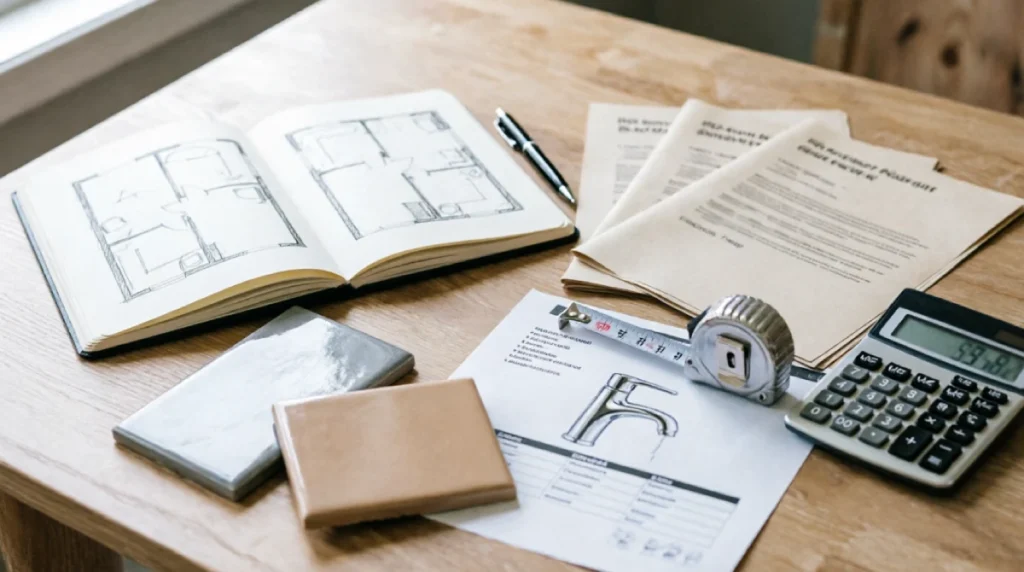
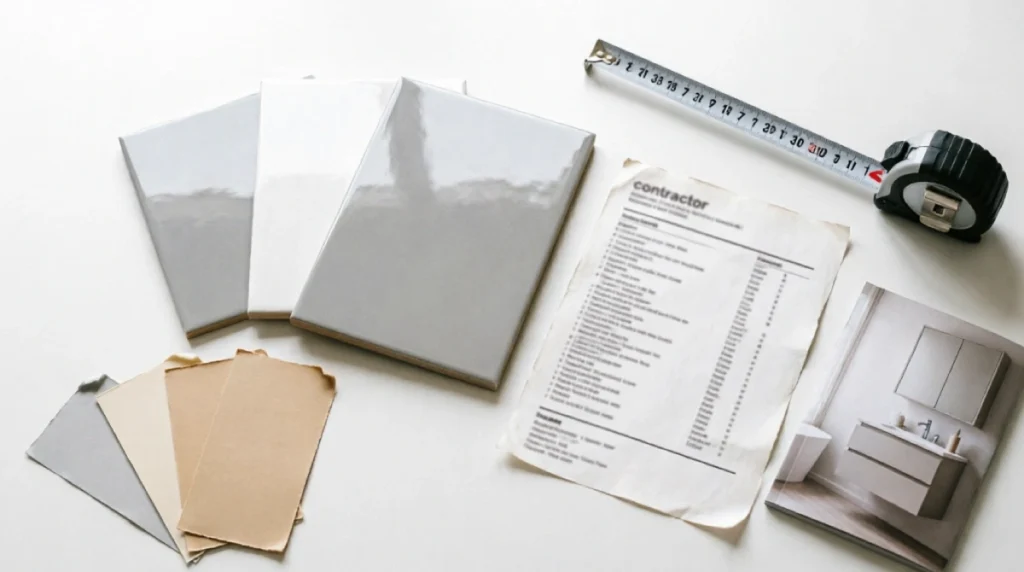
Step 3 — Choose your tile and fixtures before you hire a contractor. Contractors price jobs based on materials. If you haven’t selected tile and fixtures, you’ll get a rough estimate that often comes in lower than the actual cost. Select materials first, then get firm bids.
Step 4 — Get three bids. Florida has a large contractor market. The spread between low and high bids for the same bathroom remodel is often $2,000–$5,000. Don’t take the lowest bid automatically — check licensing on the Florida DBPR website (myfloridalicense.com) and verify they carry liability and workers’ comp insurance.
Step 5 — Build in a 15% contingency. Florida slab homes occasionally hide surprises: old galvanized pipes, water damage behind walls, or subfloor issues. Budget for it upfront.
Cost and Market Pricing for Florida Bathroom Remodels
Here’s what small bathroom remodels actually cost in Florida in 2024–2025, broken down by scope:
Cosmetic Refresh (No plumbing or electrical changes)
- New vanity, mirror, light fixture, toilet, and accessories
- Tile over existing tile (if substrate is sound)
- Fresh caulk, paint, and hardware
- Typical cost: $2,800–$6,500
Mid-Range Remodel (Some plumbing, no wall moves)
- Tub-to-shower conversion
- New floating vanity with plumbing adjustment
- Full tile replacement (floor and shower walls)
- New exhaust fan, lighting, and frameless shower door
- Typical cost: $7,500–$14,000
Full Remodel (Structural or plumbing relocation)
- Layout changes (moving toilet, relocating shower drain)
- Full tile demo and replacement
- New vanity, toilet, shower system, exhaust, and electrical
- Custom storage solutions
- Typical cost: $15,000–$25,000+
Regional pricing notes:
- Miami-Dade and Broward: contractor labor runs 15–25% higher than Central Florida
- Orlando and Tampa suburbs: mid-point pricing, competitive contractor market
- Jacksonville and Tallahassee: slightly lower labor costs, smaller contractor pool
Where to save money without sacrificing quality:
- Buy tile at Tile Shop, Floor & Decor, or Costco (yes, Costco) — all carry quality porcelain at better prices than big-box stores for larger quantities
- Choose a standard toilet rather than a wall-hung model — wall-hung toilets add $600–$1,200 to installation cost in Florida due to in-wall tank systems and CBS wall considerations
- Reuse your existing shower valve rough-in if it’s not leaking — moving the valve adds $300–$700 to plumbing costs
What Florida Homeowners Usually Get Wrong
These are the patterns that come up repeatedly in Florida bathroom remodels, usually resulting in callbacks, added costs, or redone work within two years.
- Using the wrong grout. Sanded grout in a humid Florida bathroom without proper sealing darkens and molds within 6 months. Use epoxy grout in the shower area — it’s harder to apply but doesn’t require sealing and doesn’t support mold growth. Expect to pay $1.50–$3 more per square foot for the labor difference.
- Buying fixtures before measuring. A 30-inch vanity that looks right online can make a 48-inch-wide bathroom non-functional. Measure the door swing, the toilet clearance (18 inches minimum from center to any side wall per Florida building code), and the vanity width before ordering anything.
- Skipping the fan upgrade. Almost every homeowner who remodels without upgrading the exhaust fan is back dealing with mold issues within 2–3 years. It’s a $300 fix that prevents a $3,000 problem.
- Hiring unlicensed contractors. Florida has a significant population of unlicensed handymen who will do bathroom tile work cheaply. The work looks fine for 6–12 months. Then the grout cracks, the waterproofing fails, and water gets behind the walls. Mold remediation plus a redo costs 2–3x what a licensed contractor would have charged. Verify the license. Every time.
- Ignoring the toilet rough-in distance. Florida homes built before 1990 often have a 10-inch rough-in (distance from wall to toilet drain center) rather than the standard 12-inch. Buying a standard toilet for a 10-inch rough-in requires a $150–$300 offset flange or a specific toilet model. Check this before ordering.
Practical Advice for Florida Homeowners
Based on what consistently works in Florida’s specific conditions:
- Waterproofing is not optional in the shower. Florida code requires waterproofing behind shower tile. Schluter KERDI membrane or a similar system is the standard. If a contractor quotes you without explicitly including a waterproofing membrane, ask specifically — and if they say “we use cement board,” push back. Cement board is not a waterproof membrane; it’s a substrate. Waterproofing goes over it.
- Recessed wall niches add storage without square footage. In a small bathroom, a recessed niche in the shower wall (cut between studs, 12×24 inches) adds shampoo and soap storage without protruding into the space. Cost to add during a tile job: $150–$300. Cost to add after the fact: $600+.
- Consider a tankless water heater if you’re already opening walls. Small Florida bathrooms in older homes often run out of hot water mid-shower because the 40-gallon water heater is serving the whole house. If your remodel includes opening the wall, it’s a reasonable time to upgrade — costs $800–$1,400 installed for a whole-house electric tankless unit.
- Use semi-gloss or satin paint on bathroom walls — not flat or eggshell. Florida humidity will cause flat paint to peel and blister within a year in a bathroom. Semi-gloss or satin holds up and is easier to wipe clean.
- Home Depot and Lowe’s are fine for fixtures, not for tile. Their fixture quality at the mid-range ($150–$400 faucets, $180–$350 toilets) is solid and warrantied. Their tile selection at that price point is thin and often lower quality than specialty tile stores. For tile, go to Floor & Decor or a local tile distributor.
FAQs
How much does a small bathroom remodel cost in Florida?
For a bathroom under 60 square feet, expect $3,000–$8,000 for a cosmetic refresh and $8,000–$16,000 for a mid-range remodel that includes new tile, fixtures, and a tub-to-shower conversion. Full structural remodels with layout changes run $16,000–$25,000. Labor in South Florida (Miami, Fort Lauderdale) runs higher than Central or North Florida by 15–25%.
Is a bathroom remodel worth it in Florida homes?
Yes — with conditions. Tub-to-shower conversions, updated tile, and modern fixtures consistently return 60–70% of their cost in appraised value in Florida’s market. More importantly, deferred maintenance in a Florida bathroom (old caulk, inadequate ventilation, failing tile) leads to mold and water damage that costs significantly more to remediate than a proactive remodel.
Can I DIY a bathroom remodel in Florida?
Cosmetic work — painting, replacing fixtures, swapping hardware, installing a new vanity without moving plumbing — is DIY-friendly. Tile work is within reach for a skilled DIYer, though large-format tile on a slab requires experience. Anything involving plumbing, electrical, or structural changes legally requires licensed contractors and permits in Florida. Unpermitted work creates liability at resale and can void your homeowner’s insurance claim if water damage occurs.
Do I need a permit for a bathroom remodel in Florida?
It depends on the scope. Cosmetic changes (paint, fixtures, accessories) don’t require permits. Any work involving plumbing modifications, electrical work, or structural changes requires a permit in all Florida counties. Tub-to-shower conversions require a plumbing permit. Ventilation fan upgrades that need new electrical circuits require an electrical permit. Your contractor should pull these — if they suggest skipping permits, that’s a red flag.
What’s the best tile for a Florida bathroom?
Porcelain tile, specifically rectified large-format porcelain (18×18 minimum, 24×24 preferred) in a light color. Porcelain is denser than ceramic, absorbs less moisture, and handles Florida’s temperature cycling better. Avoid natural stone in high-humidity areas without aggressive sealing schedules — marble and travertine stain and etch easily and require significant maintenance in Florida’s conditions.
How long does a small bathroom remodel take in Florida?
A cosmetic refresh takes 3–7 days. A mid-range remodel (new tile, tub-to-shower, new vanity) takes 2–4 weeks, including permit wait times. In Miami-Dade and Broward, permit processing can add 1–3 weeks to the timeline. Plan accordingly and don’t schedule the work around a hard deadline (like a home sale closing date) without a buffer.
Conclusion
Small bathrooms in Florida aren’t a limitation — they’re a design problem with well-established solutions. The homeowners who get the best results are the ones who understand the climate-specific requirements (waterproofing, ventilation, porcelain over ceramic), hire licensed contractors, pull permits, and budget realistically with contingency built in.
A thoughtfully remodeled small bathroom in a Florida home — $8,000 to $14,000 for a solid mid-range job — is one of the highest-return projects you can do. It adds daily function, reduces ongoing maintenance costs, and consistently performs well in resale conversations.
The keys are simple: use the right materials for Florida’s humidity, don’t cut corners on waterproofing, and work with a licensed professional for anything beyond cosmetic changes. Get those three things right, and the rest follows.
